 keymodels
Obliquity (Kay)
How can obliquity (kay) support strategic choice or positioning?
Contents
Kay’s obliquity is the idea that complex goals may best be pursued indirectly. Oblique approaches recognise that complex objectives tend to be.
John Kay’s principle of obliquity holds that some complex goals are best achieved indirectly. When objectives are uncertain, multidimensional and shaped by other people’s responses, direct optimisation can narrow attention or damage the very conditions that produce the desired outcome.
When to use it
When an objective has been oversimplified, measures are becoming targets, or the path must be discovered through adaptation. Use direct action when causality is stable and the goal is clear.
Origins
Economist John Kay developed the principle in essays and later in Obliquity: Why Our Goals Are Best Achieved Indirectly. He used examples from business, public policy and personal life to argue that profit, happiness and other complex outcomes often emerge from pursuing excellent practice or meaningful intermediate purposes.
What it is
Obliquity does not mean avoiding goals or acting randomly. It means recognising that intentions and outcomes may be connected through feedback, discovery and several competing values.
Kay’s Panama Canal illustration makes the idea vivid. A naïve direct route might appear to run west across Nicaragua. The chosen canal instead follows geography so that Balboa lies 30 miles south-east of Colón. The route uses terrain and earlier pathways rather than compass direction alone.
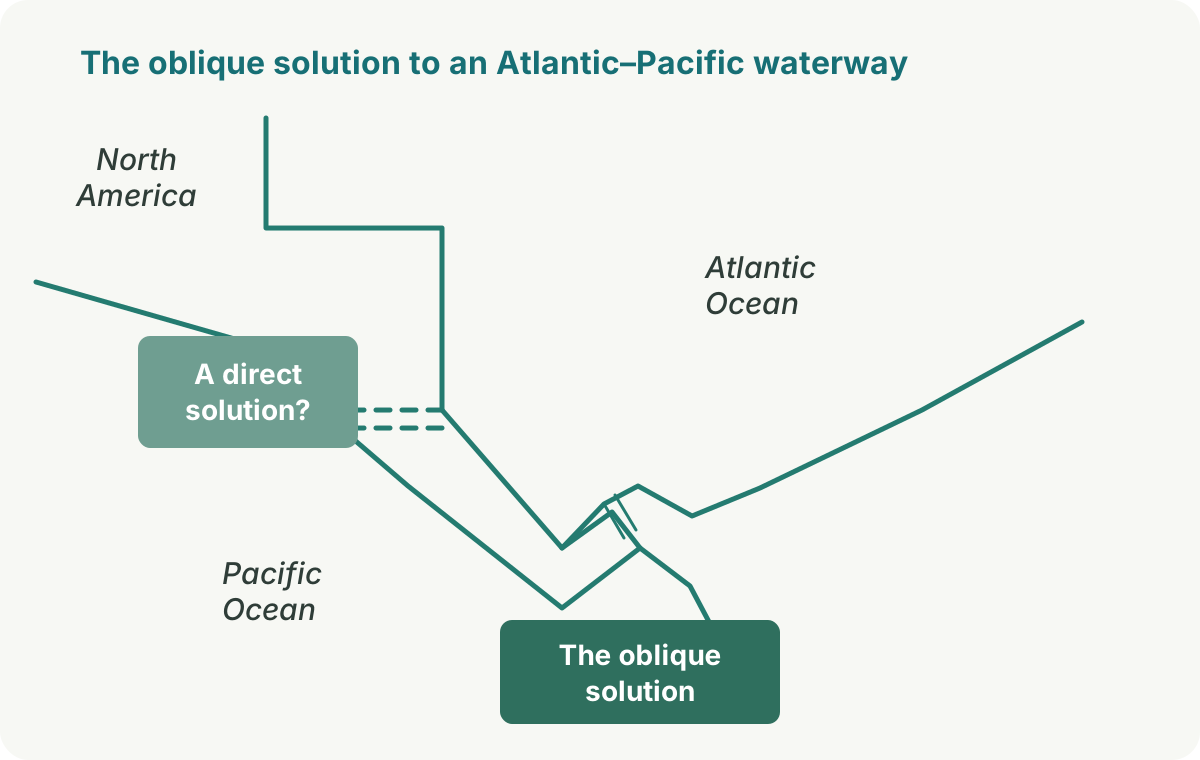
Kay also cites firms whose strongest financial periods followed a focus on product, customers or capability rather than quarterly profit alone. Examples involving Ford, Sam Walton, Warren Buffett, ICI, Marks & Spencer and Boeing are illustrations, not controlled proof that profit focus always fails.
The practical claims are:
- complex objectives may be incomplete or internally conflicting;
- available options are discovered sequentially;
- action changes the system and reveals new information;
- expertise and tacit knowledge matter when rules are insufficient;
- intermediate purposes can guide behaviour better than a distant outcome metric.
Continue your preview
Read more of Obliquity (Kay).
Create a free account to continue this advanced article preview. Complete access is available with Pro or an eligible outcome pack, so you can see the value before deciding to upgrade.