 keymodels
CAGE distance framework
How can cage distance framework support strategic choice or positioning?
Contents
The CAGE distance framework, introduced by Pankaj Ghemawat, identifies differences between countries that organisations must address when doing business internationally.
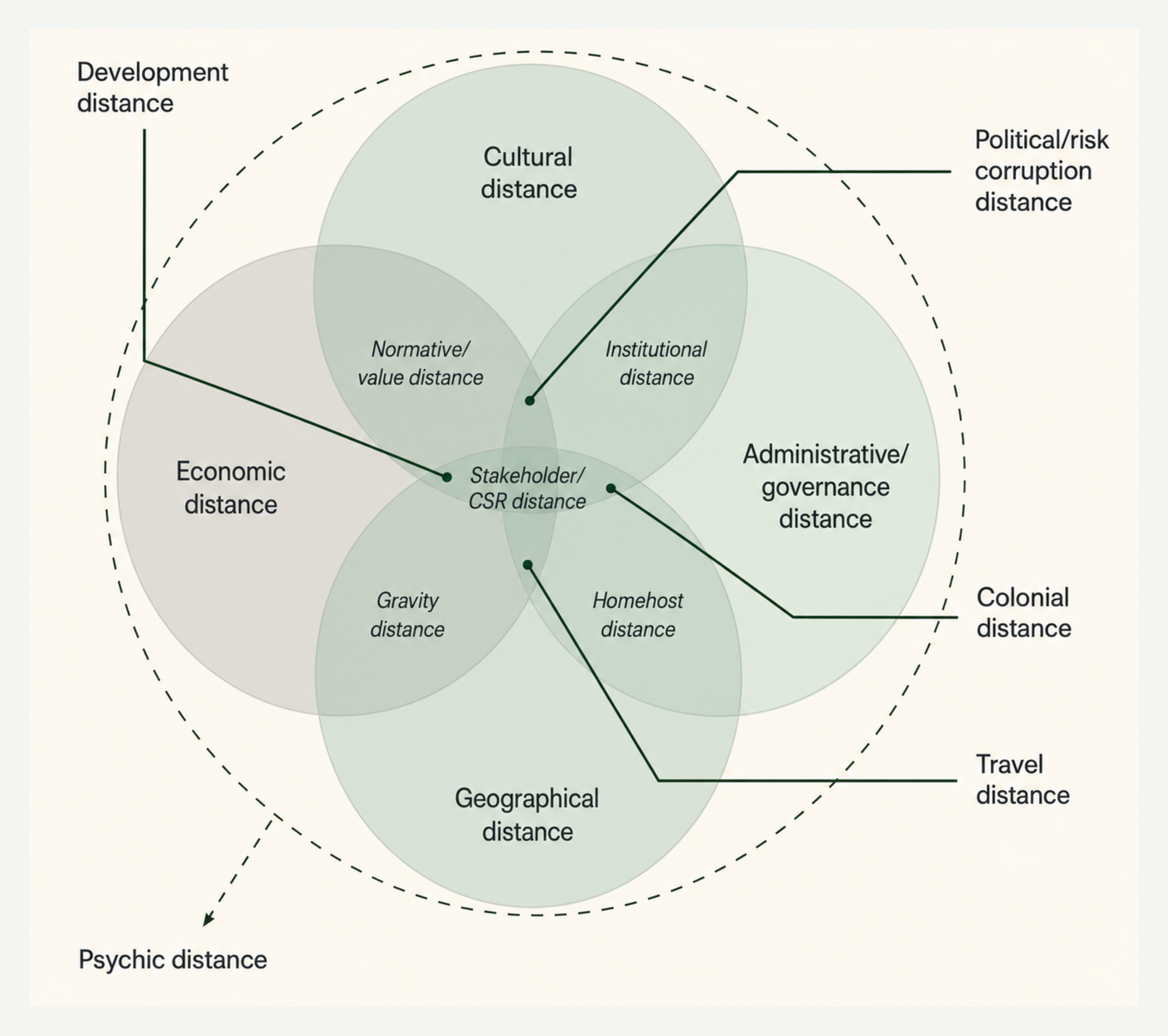
Pankaj Ghemawat’s CAGE framework helps organisations examine the distance between countries before committing to international expansion. It separates distance into four dimensions—cultural, administrative, geographic and economic—because the visible size of a foreign market says little about how difficult it will be to serve from a particular home base.
When to use it
Use CAGE to compare candidate markets, adapt an entry strategy or understand why an international operation is underperforming. The analysis is useful for:
- adjusting market potential for the friction created by cross-country differences;
- identifying the organisation’s liability of foreignness in a target country;
- determining which products, activities or industries are especially sensitive to particular forms of distance;
- anticipating adaptations, partnerships and capabilities required for entry; and
- assessing foreign competitors both in their home markets and in yours.
CAGE can also reveal barriers that protect the home market. The comparison is always relative: the same target country may be close to one competitor and distant from another.
Origins
Pankaj Ghemawat introduced the framework in his two thousand and one Harvard Business Review article “Distance Still Matters: The Hard Reality of Global Expansion.” It challenged the assumption that globalisation had made national differences commercially unimportant. Ghemawat later developed the approach in Redefining Global Strategy (two thousand and seven), using the CAGE acronym to organise the cultural, administrative, geographic and economic differences that shape cross-border activity.
What it is
CAGE is a bilateral and industry-sensitive comparison, not a universal league table of countries. It asks how far a target market is from a specific home base on four dimensions and how much each difference matters to the product, customer and activity being considered. Distance usually creates friction, but it can sometimes create opportunity—for example, economic differences may enable complementary locations for production and demand.
Continue your preview
Read more of CAGE distance framework.
Create a free account to continue this advanced article preview. Complete access is available with Pro or an eligible outcome pack, so you can see the value before deciding to upgrade.