 keymodels
Socially engineered change
How can socially engineered change support strategic choice or positioning?
Contents
A planned-change approach that links a defined end state with leadership, coordinated projects, two-way communication and experiential learning.
Organisational change often fails when leaders lack a shared destination, programme teams are disconnected from operations, projects work in isolation or communication fragments. Socially engineered change offers a coordinated way to make a new method, reorganisation or post-merger integration part of normal work rather than a temporary programme.
When to use it
Use the model when an organisation has chosen a strategy or working method and needs to embed it quickly but sustainably. The approach begins with a clear view of the intended end state—echoing Covey’s principle of beginning with the end in mind—and translates that destination into practical rules for daily business. It is most suitable when the change can be planned, directed and described with enough precision for managers and teams to act consistently.
Origins
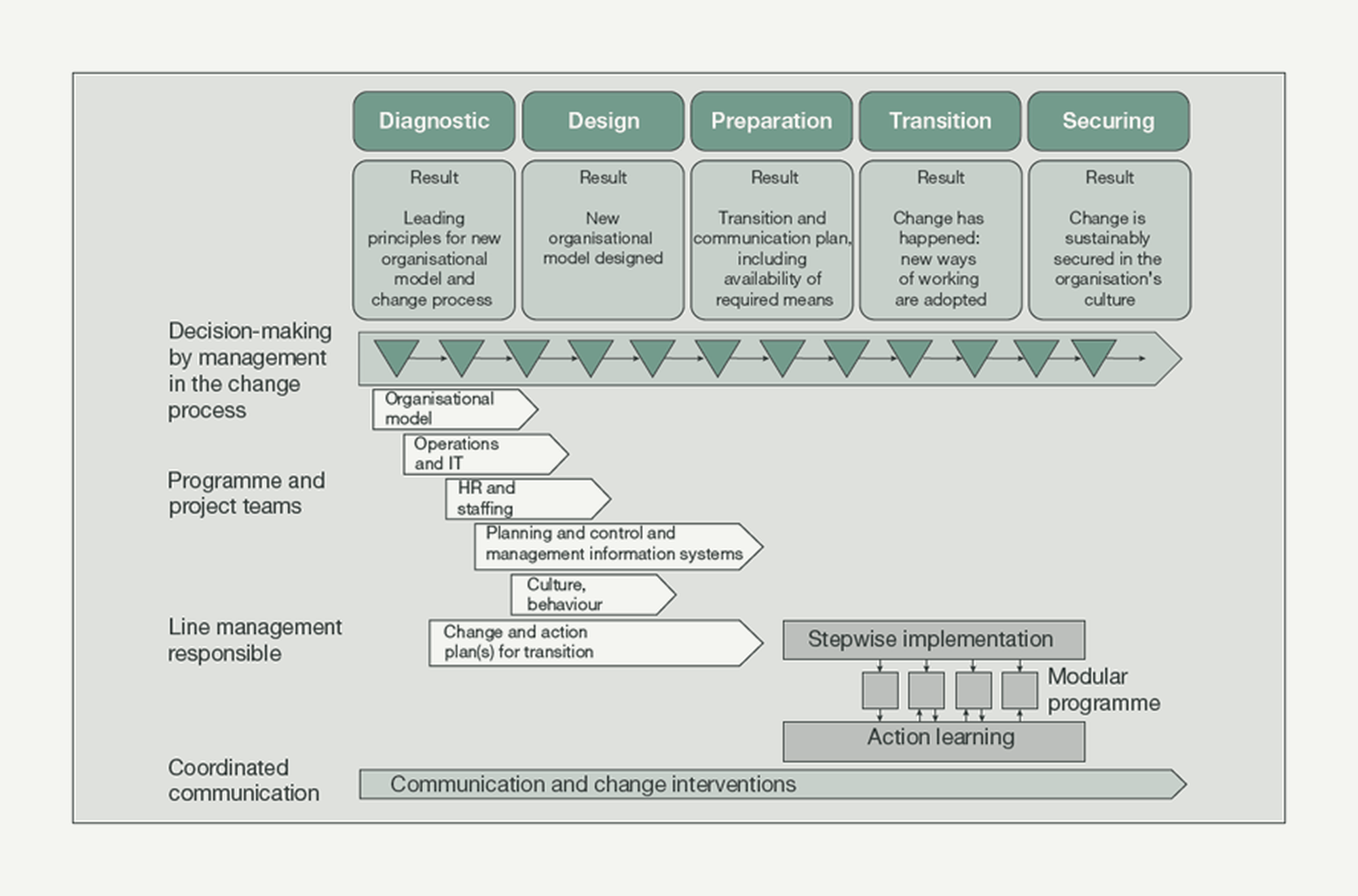
J.J. Wobben, A. Kalshoven and R. de Groot formulated the model in the Dutch work De Maakbare Verandering, later presented in English as Socially Engineered Change: A Targeted Approach for Successful Change. It belongs to the planned-change tradition: define the destination, turn it into operating principles, coordinate leaders and key participants, use communication in both directions and reinforce new behaviour through experience.
What it is
The model combines five principles. Change should be approached as an integrated system; the method should embody the intended result; leaders and influential people should have explicit roles; communication should carry feedback as well as instruction; and people should learn the new way of working through practice. A central programme sets direction and coordinates activity, while line managers make the target state real in everyday decisions and feed experience back into the programme.
Continue your preview
Read more of Socially engineered change.
Create a free account to continue this advanced article preview. Complete access is available with Pro or an eligible outcome pack, so you can see the value before deciding to upgrade.