 keymodels
Road-mapping
How can road-mapping support strategic choice or positioning?
Contents
Road-mapping concerns the creation of a common vision.
Road-mapping creates a shared, time-based view of how markets, products, technologies and capabilities may evolve. It connects a desired future with the decisions, research, resources and milestones that could make that future possible. The map is a coordination instrument, not a prediction.
When to use it
Use product–technology road-mapping when future customer needs and technical choices must be aligned across functions or organisations. It is particularly valuable in technology-intensive settings with long development lead times, interdependent platforms or shortening product life cycles.
A useful road map describes:
- Delivery
- products, capabilities and research outputs required.
- Purpose
- the market need, strategic objective and value each layer serves.
- Timing
- horizons, decision gates, dependencies and critical milestones.
- Resources
- people, funding, partnerships, data and technology needed.
Road-mapping can:
- create a shared evidence base for long-range planning;
- connect external market and technology signals with internal choices;
- align R&D, product, commercial and capability investment;
- identify opportunities to reuse platforms or technologies;
- expose gaps, uncertainty and long-lead dependencies;
- coordinate suppliers, customers, researchers and partners; and
- help teams adapt when assumptions change.
Origins
Technology road-mapping developed in industrial planning and was popularised through corporate practice at Motorola before spreading to sector, national and research settings. Industry road maps coordinate priorities across organisations; corporate road maps guide a single enterprise; product–technology road maps connect market needs, products and enabling technologies; and competence–research road maps identify the knowledge and research required.
What it is
The method lays several linked layers across time. A market layer expresses changing needs and drivers; a product or service layer shows how the offer may respond; technology and capability layers identify what must be available; and project or resource layers show the work needed to close the gaps.
Common forms include:
- Industry road maps
- , which describe shared challenges, standards and development paths across a sector. They can coordinate precompetitive research and support funding discussions, but require governance around competition, confidentiality and whose priorities dominate.
- Corporate road maps
- , which connect strategy with product–market and capability choices inside one organisation.
- Product–technology road maps
- , which combine market analysis, product assessment and technology scanning into an R&D and rollout plan.
- Competence–research road maps
- , which focus on scientific knowledge, skills, facilities and research programmes needed to enable a technology.
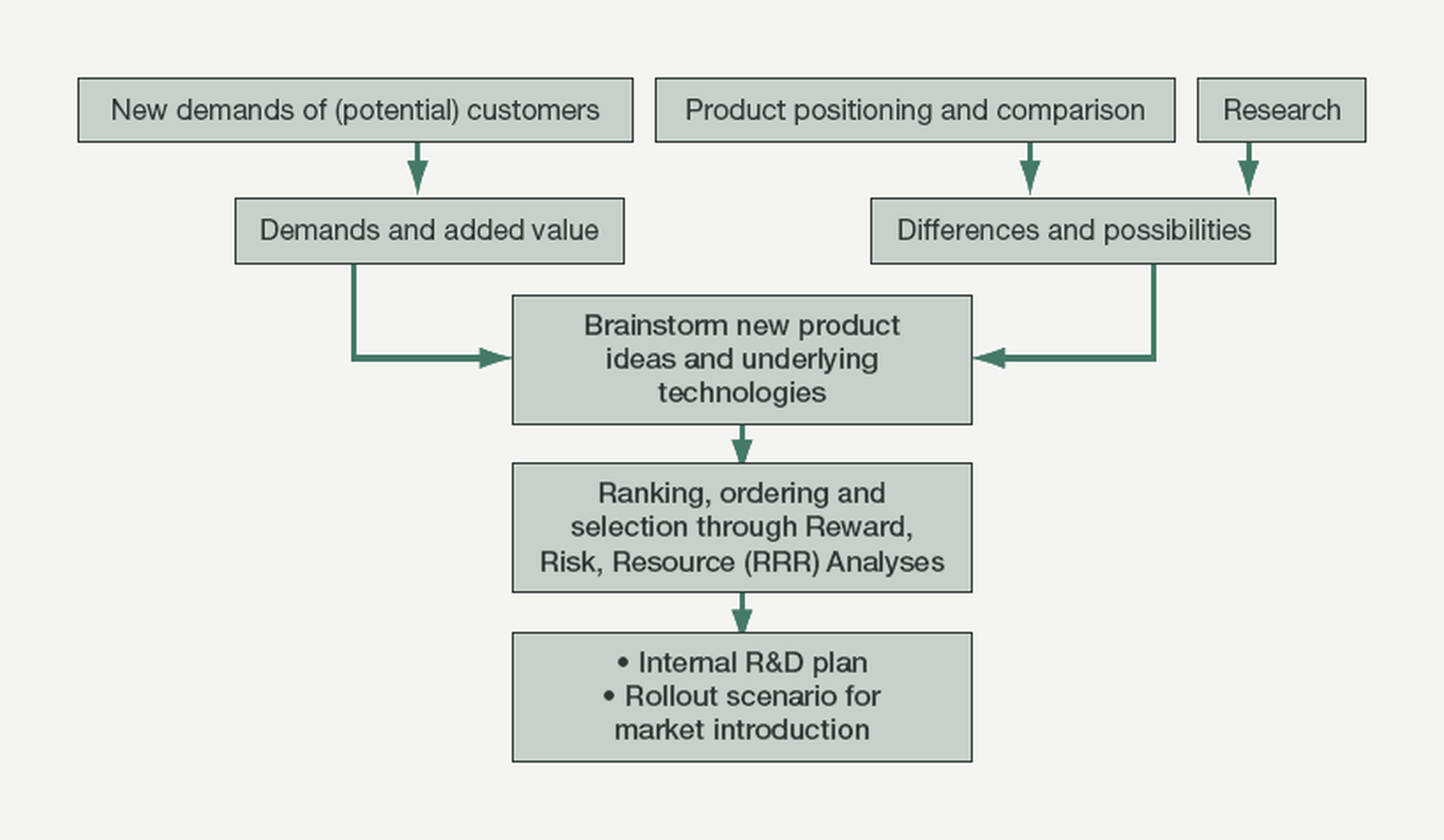
A road map may contain scenarios or alternative branches where uncertainty is high. The discipline lies in linking layers through explicit reasoning: a technology belongs on the map because it enables a product capability that serves a market need.
Continue your preview
Read more of Road-mapping.
Create a free account to continue this advanced article preview. Complete access is available with Pro or an eligible outcome pack, so you can see the value before deciding to upgrade.